Programmatic access
Most translation APIs return strings. Yours needs to return the file.
If your system handles documents, a text-in-text-out API leaves you the hardest part: putting the translation back where it came from. Ours returns the finished document, with the layout, terminology and quality check already applied.
Programmatic access is scoped per engagement. There is no self-service key.
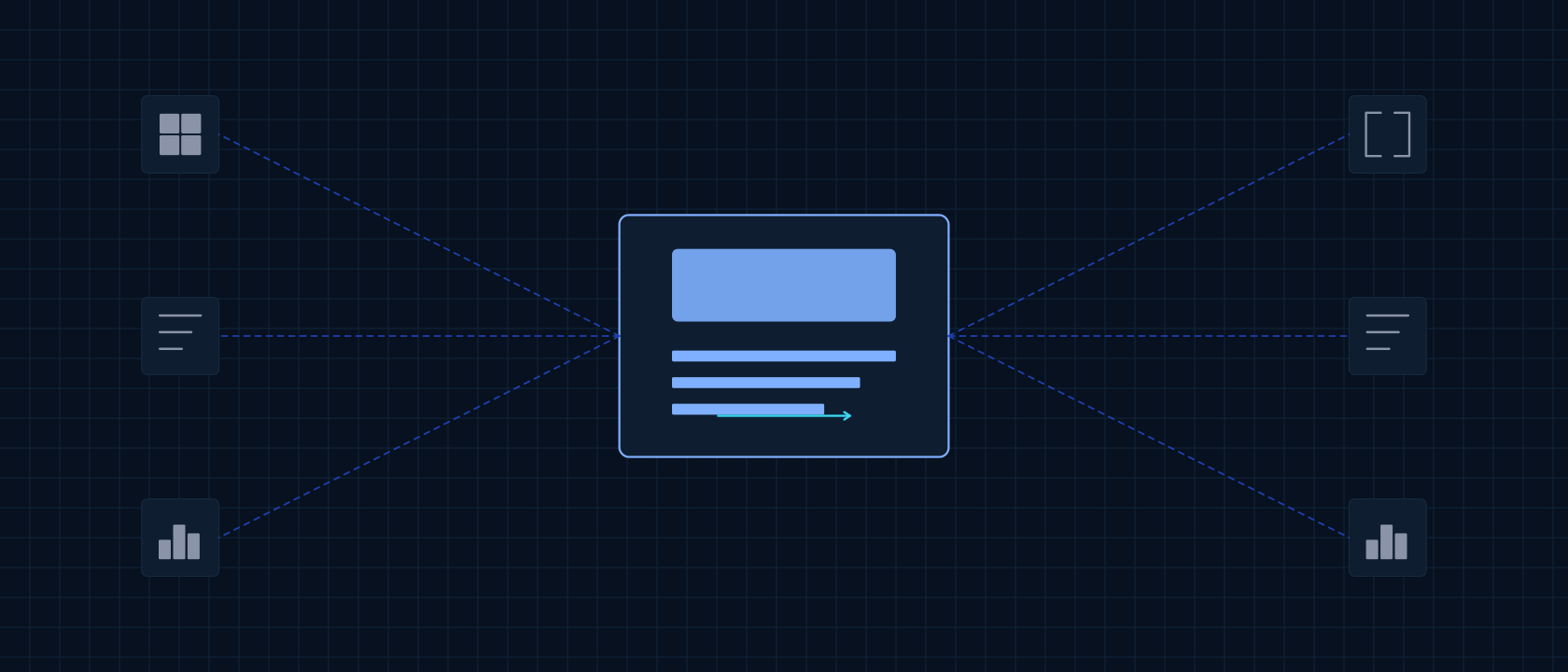
What the access covers
Described as capabilities rather than endpoints — the interface is agreed during scoping, not picked off a page.
Document submission and retrieval
Submit files programmatically, receive the finished documents back. Up to 50 files per submission, 500 MB per file.
Job status and progress
Track a submission through inspection, translation and quality check rather than polling a single opaque status.
Glossary management
Create and apply term lists programmatically — TXT, CSV or XLSX, up to 2000 terms per glossary.
Region-level reprocessing
Mark a region and request restore, retranslate or keep. Useful when your own reviewers catch something.
Batch resume
An interrupted batch continues from the last completed page instead of restarting.
Agent access
An agent-facing access mode for AI tooling, scoped and authorised per engagement rather than issued as an open key.
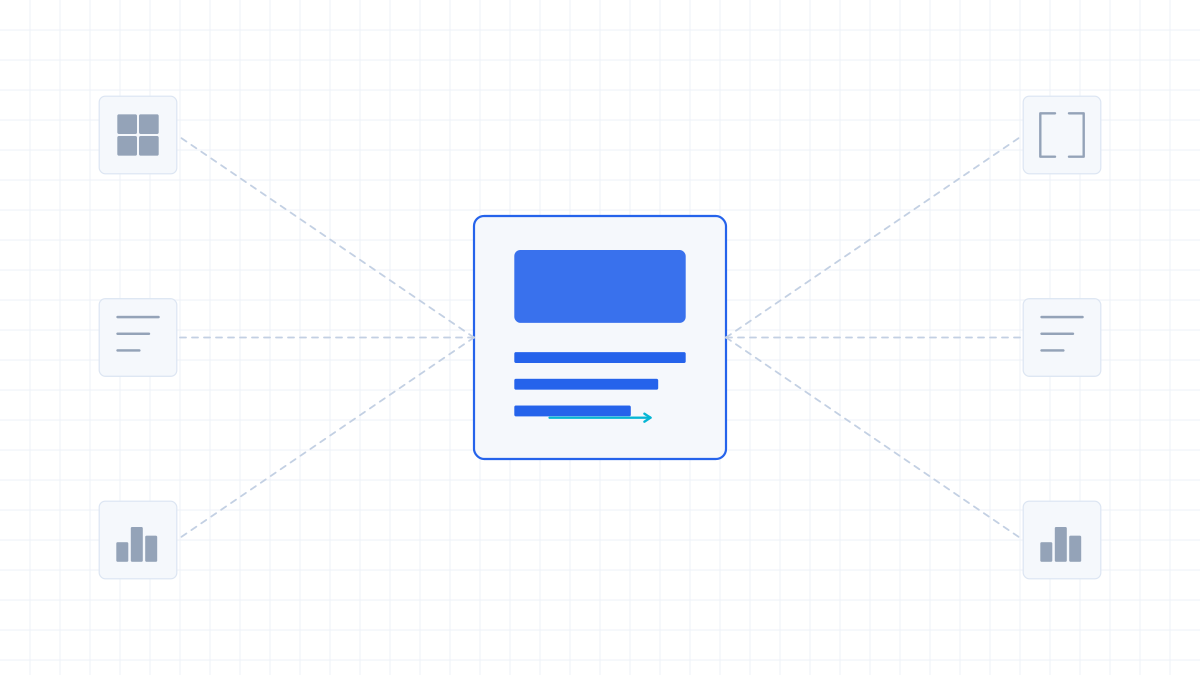
Where a text API stops and this starts
The difference is what comes back.
A text translation API takes strings and returns strings. Everything about the document — the structure, the position of a chart, the way a table flows across pages — is information the caller is responsible for reassembling.
For a chat interface that is fine. For a document workflow it means you own a format-specific reassembly problem for every file type you accept, and that problem is where most of the engineering time goes.
We return the finished document instead. Your system handles the submission and the delivery; the reassembly is not your problem.
What you can send
Formats and limits, exactly as our production system enforces them today. Nothing else on this site is a number.
Documents
PDF, DOCX, PPTX, XLSX, DOC, PPT and XLS. Up to 500 MB per file.
Images
JPG and PNG, routed down the optical recognition path when the content is image-only.
Scanned and mixed files
A PDF that mixes digital and scanned pages is handled page by page rather than as one treatment.
Glossaries
TXT, CSV and XLSX term lists, up to 2000 terms per glossary.
API questions
Can we get an API key and start today?
No. There is no self-service signup and no published key. Programmatic access is scoped with your engineering team, because the interface depends on what your system needs to do.
Do you publish endpoint documentation?
Not on this site. Interface details are agreed during scoping and documented for the engagement.
Is it REST? GraphQL? Something else?
The shape is part of scoping. Tell us what your system can call and we will tell you what is workable.
What are the rate limits?
We do not publish throughput or latency figures, because we have not measured them under conditions that would make a published number honest. Capacity is discussed as part of scoping against your expected volume.
Can it call back into our system when a job finishes?
Callback behaviour is part of the interface conversation. Tell us what your system expects and we will map it.
How do we test it before committing?
Send a real document through the sample evaluation first. If you want to run a set of your own files, that is part of scoping.
Tell us what your system needs to call.
The interface is a design conversation, not a download. Describe what your system does and we will tell you what the connection takes.
- You describe the system
- We map the interface
- You get a feasibility answer