Sample evaluation
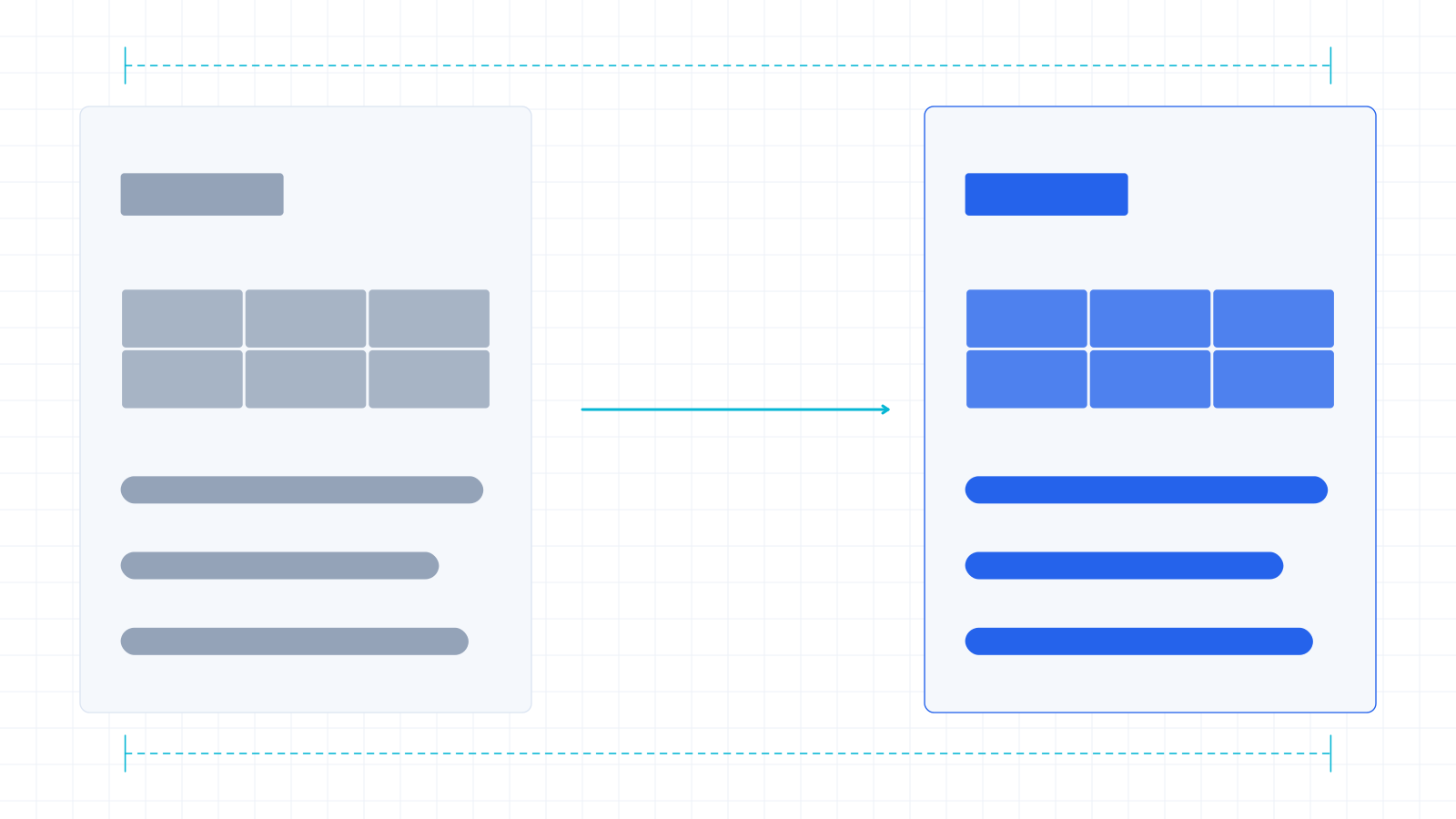
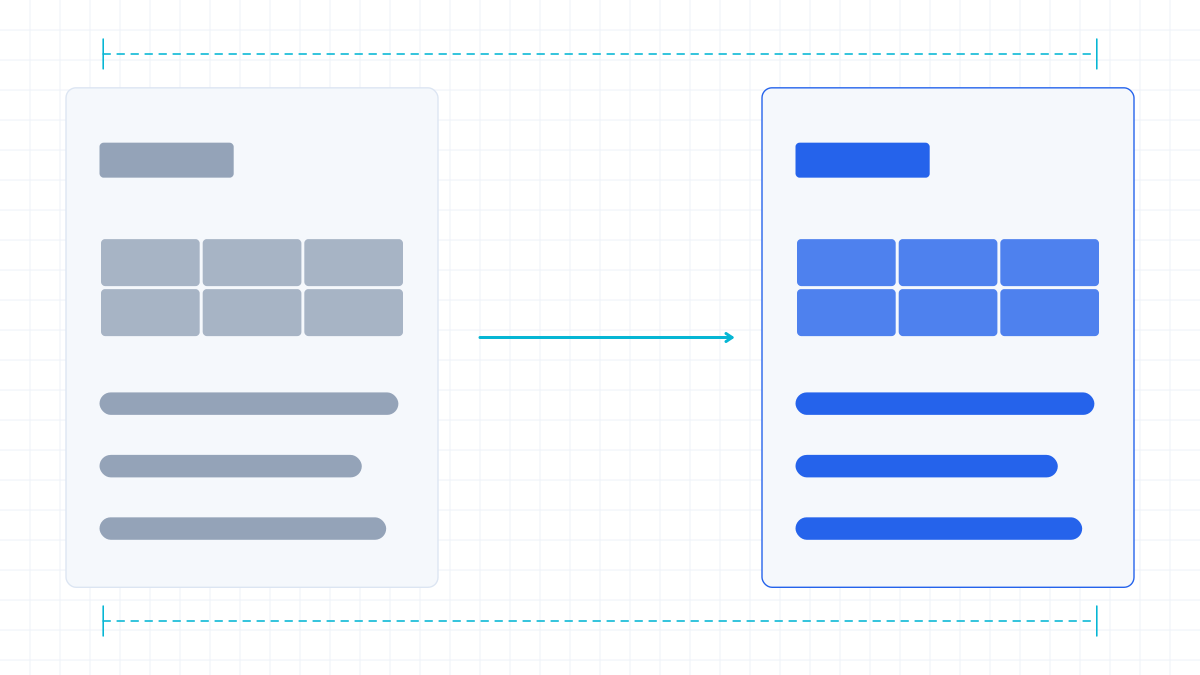
Send one real document. Get it back translated, layout intact.
There is no trial account, and that is deliberate. A trial account would let you click around a product; it would not tell you whether your documents come back correctly. This does.
One document. No commitment. You judge the output.
How it works
Three steps, one exchange. The finished file comes back within 72 hours of us receiving it.
- 01
You send a document
A real one — ideally the file that normally causes trouble. A scanned PDF, a chart-heavy deck, a spreadsheet with formulas. That is the file that tells you something.
- 02
We run it end to end
Through the same path your production work would take: inspection, per-page routing, translation, terminology enforcement, independent quality check, visual verification.
- 03
You get the finished file
Back within 72 hours of us receiving it. Open it, check the layout, the terminology, the pages that usually break. That is the evaluation — you are judging the output, not a demonstration.
What to send
The useful sample is the awkward one. A clean document proves nothing.
Send something representative of the work you actually do. If most of your documents are straightforward, send a straightforward one — but if you have a file type that always causes problems, that is the file worth spending the evaluation on.
If you want to test terminology, include a glossary. TXT, CSV or XLSX, up to 2000 terms. If you want to test a specific language pair, say which — coverage is configured to your markets rather than a fixed published list.
If your documents cannot leave your infrastructure, say so at the start. That changes the conversation to private deployment, and there is no point running a sample that you could never use.
What you will be able to judge
These are the things a sample actually shows you. A feature list cannot.
Whether the layout survives
Tables, headers, numbering, slide geometry — in your document, not in a demonstration file chosen because it works.
Whether terminology holds
If you send a glossary, you can check every term. That is a concrete thing to verify rather than a claim to accept.
How awkward pages are handled
Scanned pages, mixed PDFs, chart-heavy slides. This is where most pipelines fail and where a sample is most informative.
Whether the output is usable as delivered
The real question: can this go to your client, or does someone have to rebuild it first? You will know within minutes of opening the file.
What happens after
Nothing automatic. You decide.
If the output is what you needed, the next conversation is about scope: volume, language pairs, turnaround expectations and how it connects to your existing tools.
If it is not, tell us why. A specific failure — a table that broke, a term that drifted — is more useful to us than a general no, and sometimes it is something we can fix.
Either way there is no follow-up sequence, no automated nurture, and no obligation created by asking for a sample.
Sample evaluation questions
Is it really free?
Yes. One document, run end to end, no commitment. We do not discuss pricing on this site at all — commercial terms only come up if you want to go further.
How many documents can I send?
Start with one. The point is to see how the pipeline handles your material, and one representative file usually does that. If you need to test several document types, say so and we will work it out.
How long does it take?
The evaluation comes back within 72 hours of us receiving the file. That figure covers the sample evaluation only. We do not publish turnaround figures for production work, because those depend on volume and we have not measured them under conditions that would make a published number honest — that is discussed as part of scoping.
Can I send a file with confidential content?
Send a redacted version with the same structure. What the evaluation tests is how the pipeline handles the layout and the format — the content itself does not matter.
Do I need to sign anything first?
Talk to us about what your situation requires. Terms are set per engagement, and if your material needs an agreement in place before it moves, we will sort that out first.
What if I just want a quote?
Send the document. A quote based on a real file is worth something; a quote based on a description is a guess.
Send the file. See the output.
One document, run through the same pipeline your production work would take, returned to you finished.
- No trial account
- No commitment
- Judged on the output