Solutions
Technical documents are structure first and prose second.
A specification is navigated by its numbering. A procedure is followed step by step. If the structure degrades in translation, the document stops working as a document regardless of how good the sentences are.
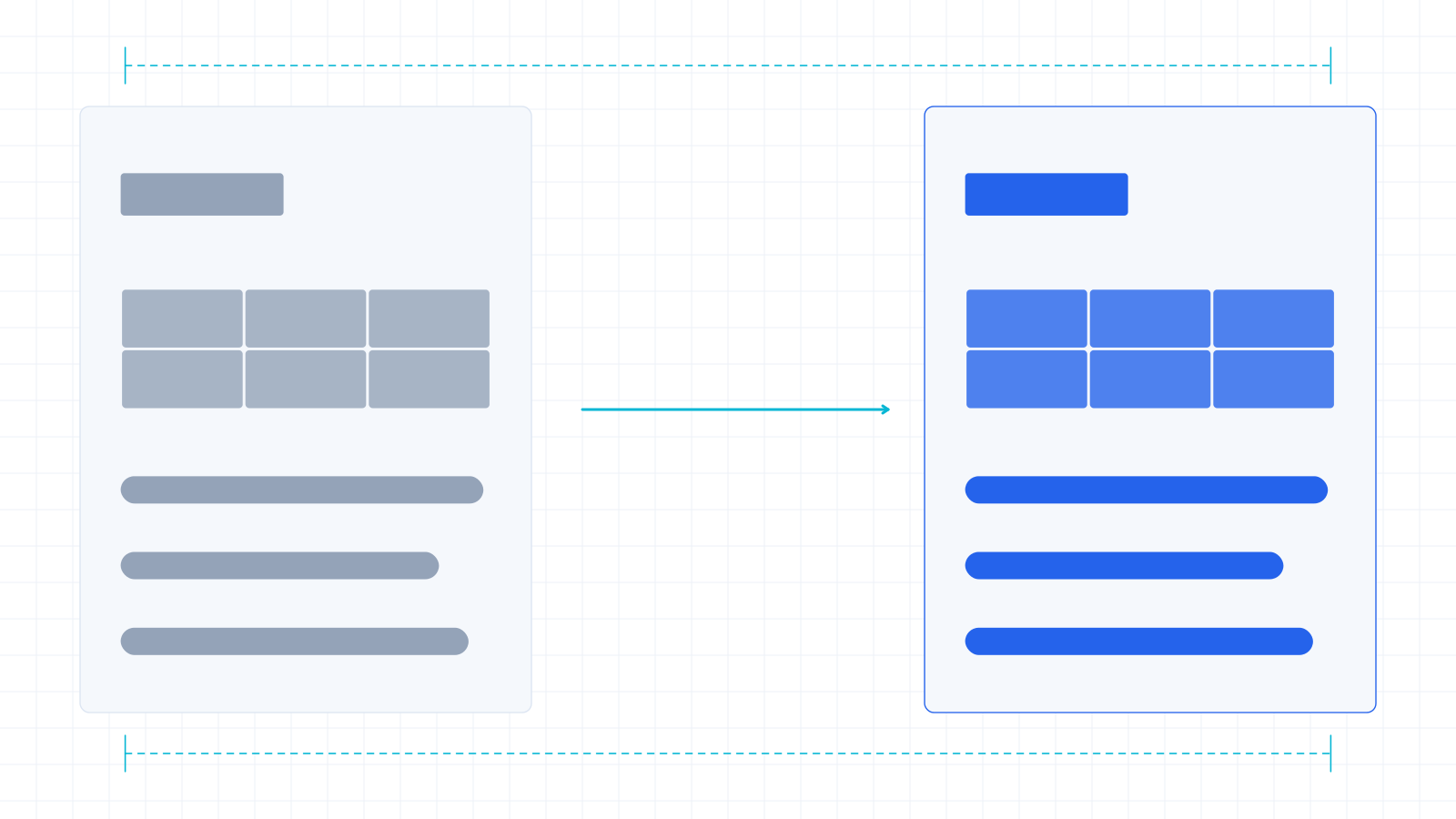
What makes these documents hard
Four document-level problems that come up in every technical set.
Numbering and cross-references
Sections that reference other sections. If the numbering shifts, the references point at the wrong place.
Step sequences
A numbered procedure where a step is merged, split or reordered is a procedure that no longer matches the thing it describes.
Tables of parameters
Specifications are full of tables. Losing column structure turns a specification table into unreadable prose.
Embedded diagrams
Technical documents carry labelled diagrams. Whether the labels need handling is worth scoping rather than assuming.
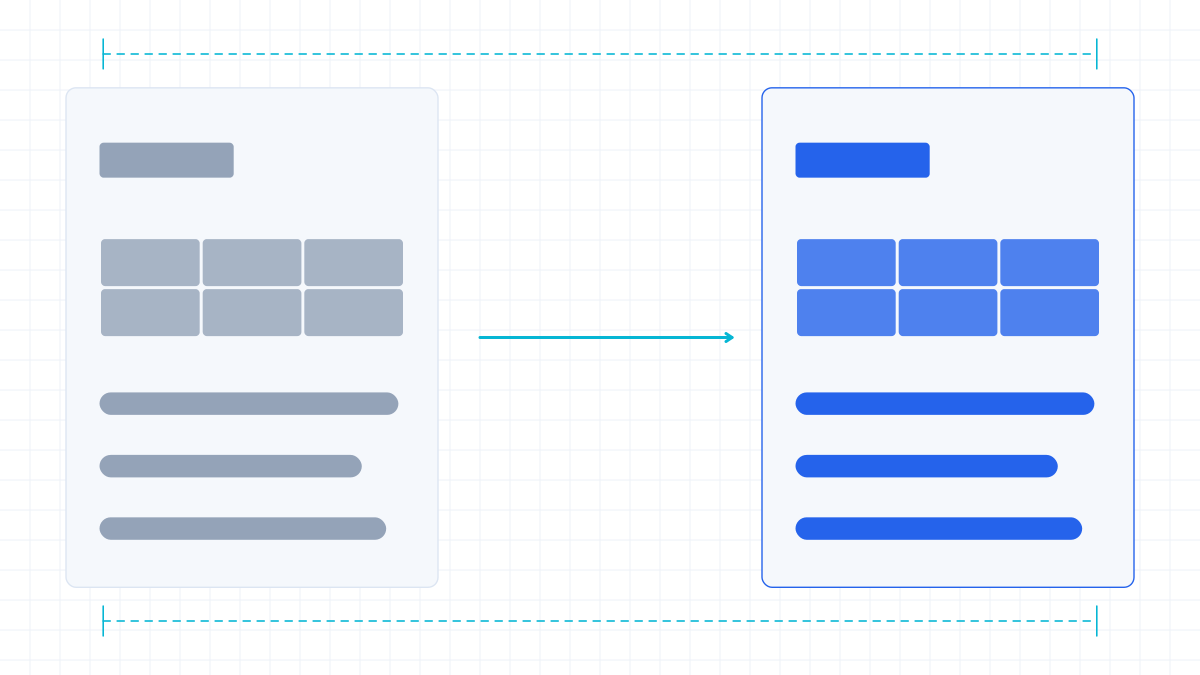
The documents we get
The document types that come up most in this category.
Manuals and operating instructions
Long, numbered, procedure-heavy, often with safety callouts.
Specifications and datasheets
Table-driven documents where the structure carries the technical content.
Standard operating procedures
Step sequences where order and completeness are the requirement.
Tender and bid documentation
Template-driven, frequently voluminous, often with scanned annexes.
Terminology and consistency
Your term list, enforced during translation.
Technical terminology is where consistency shows. The same component named two ways in the same document is a defect, and it is the kind a glossary prevents rather than a reviewer catches.
Send your term list — TXT, CSV or XLSX, up to 2000 terms — and it is applied during translation. If your terminology lives in another system, tell us where and we will scope what reading from it takes.
We do not supply domain glossaries. The terms your work is judged against are yours, and that is the right way round.
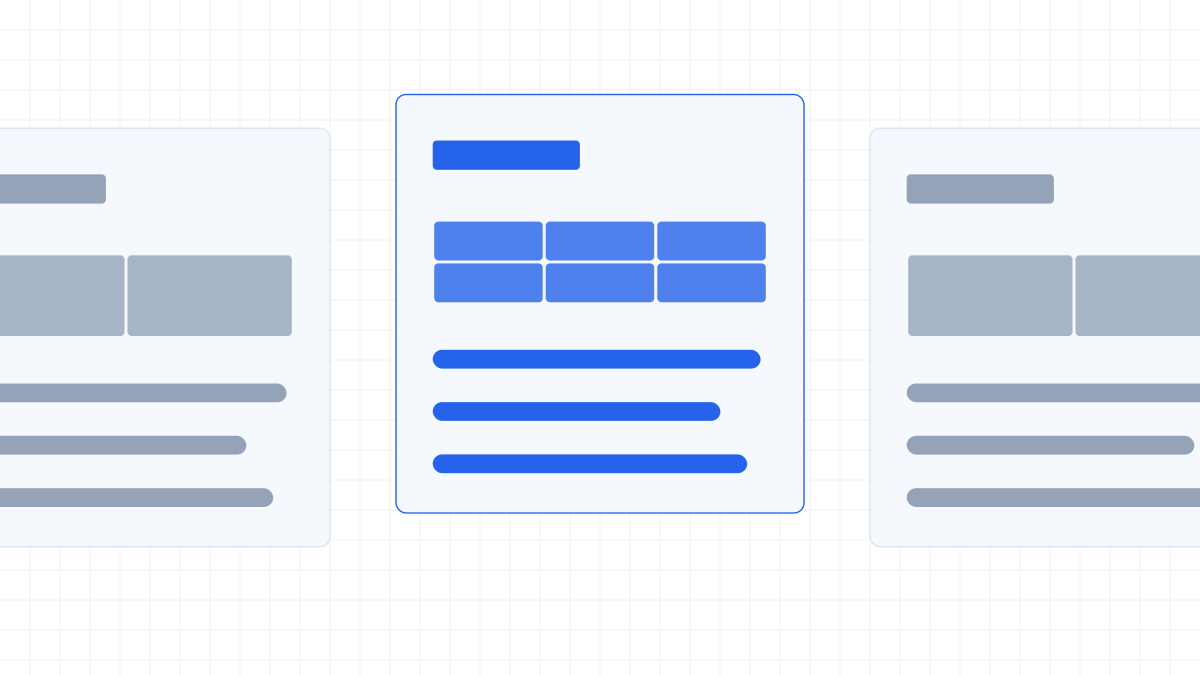
How the work runs
Four steps, same pipeline for every industry.
- 01
You send one real document
The awkward one if you have it. It is evaluated on the same path your production work would take.
- 02
We run it end to end
Inspection, per-page routing, translation with your terminology applied, independent review, visual verification.
- 03
You judge the returned file
Layout, terminology, the pages that normally break. That is the evaluation.
- 04
Scope is agreed separately
Volume, language pairs, turnaround and integration. The sample tells you whether to have that conversation at all.
Questions
How is numbering preserved?
Translated text is written back into the original document rather than into a rebuilt one, so the numbering structure is the source's structure.
Do you handle diagrams with labels?
Text inside an image is handled through the image path rather than the document's text layer. Tell us if your documents depend on it and we will scope it properly.
Can you enforce our component terminology?
Yes — up to 2000 terms per glossary, applied during translation rather than as a correction afterwards.
What about scanned annexes?
Pages without a text layer go down the optical recognition path, decided page by page in a mixed file.
Do you handle very large documents?
Up to 1000 pages per PDF and 50 files per submission. Interrupted batches resume from the last completed page rather than starting over.
Send us a document with numbered procedures.
Numbering, step sequences and parameter tables are where technical translation usually breaks. One file will tell you whether it does here.
- No signup, no self-service portal — you send a file, we run it.
- You get the finished document back, not a screenshot of one.
- If it is not good enough, you have lost nothing.