Language quality
A translator should not grade its own paper. Ours does not.
Most pipelines generate a translation and hand it over. The result gets checked by whoever receives it — which means your reviewer, or your client. We run the check ourselves, on a separate model, before the document leaves.
Quality checking is part of the pipeline, not a paid add-on.
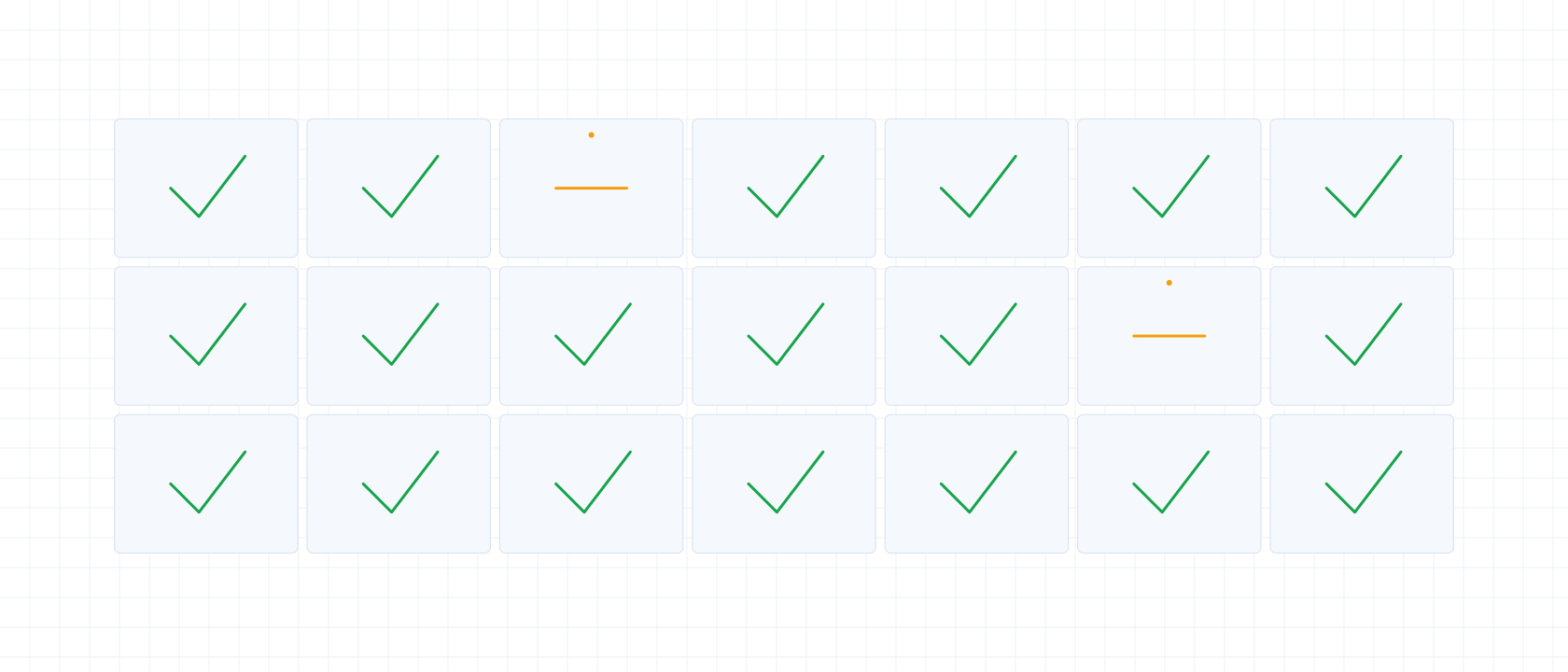
The four checks that run
Each one exists because of a specific failure it catches.
Terminology verification
Every glossary term is checked against the output. If a term was not applied, that is a defect, not a stylistic difference.
Completeness check
Nothing missing and nothing left untranslated. A dropped paragraph is the failure a reader notices first.
Independent model review
A separate model from the one that produced the translation reviews the result. This is the structural defence against a model approving its own mistakes.
Visual verification
The rendered output is compared against the source document so layout failures — overflow, overlap, a table that broke — are caught before delivery.
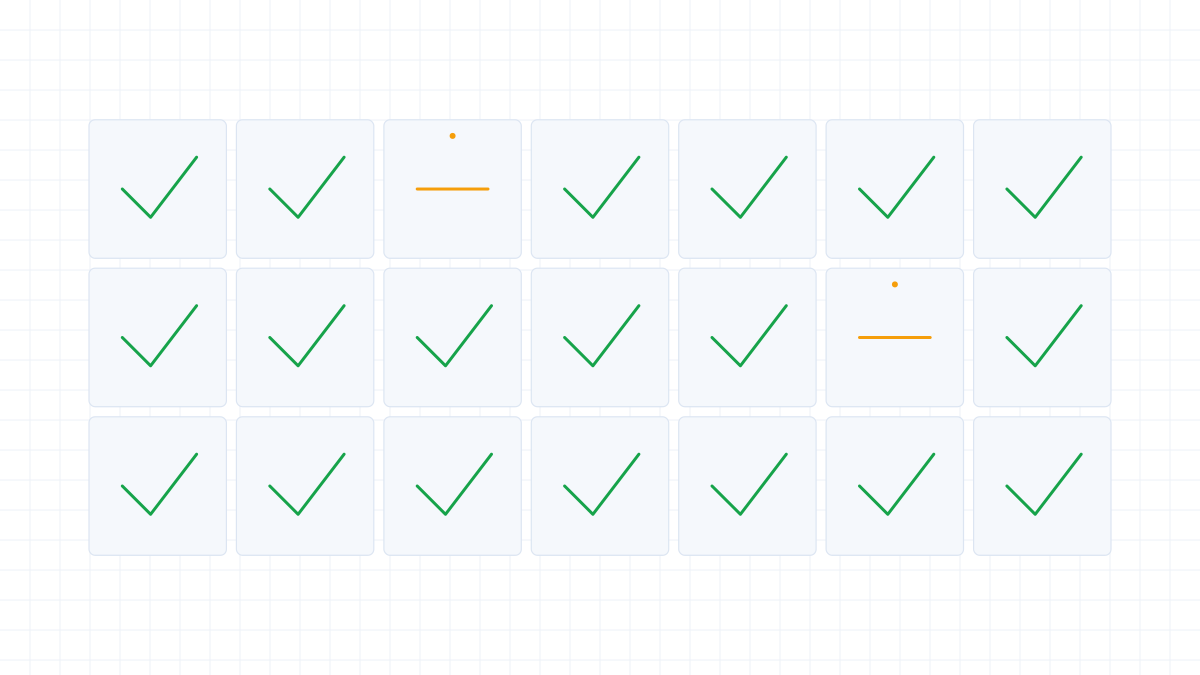
Why the independent check matters
A model reviewing its own output tends to agree with itself.
This is not a subtle point. If the same model both produces and reviews, the review inherits the same blind spots — the term it consistently mistranslated will look correct to the reviewer that produced it, because it is internally consistent.
Using a different model for the review breaks that consistency. It is not that the second model is better; it is that its errors are different, so the overlap between the two sets of blind spots is much smaller.
That is also why the visual check exists separately from the text check. A text-level review will not notice that a translated headline no longer fits its box, or that a chart label ended up outside the chart.
When something is wrong, you point at it
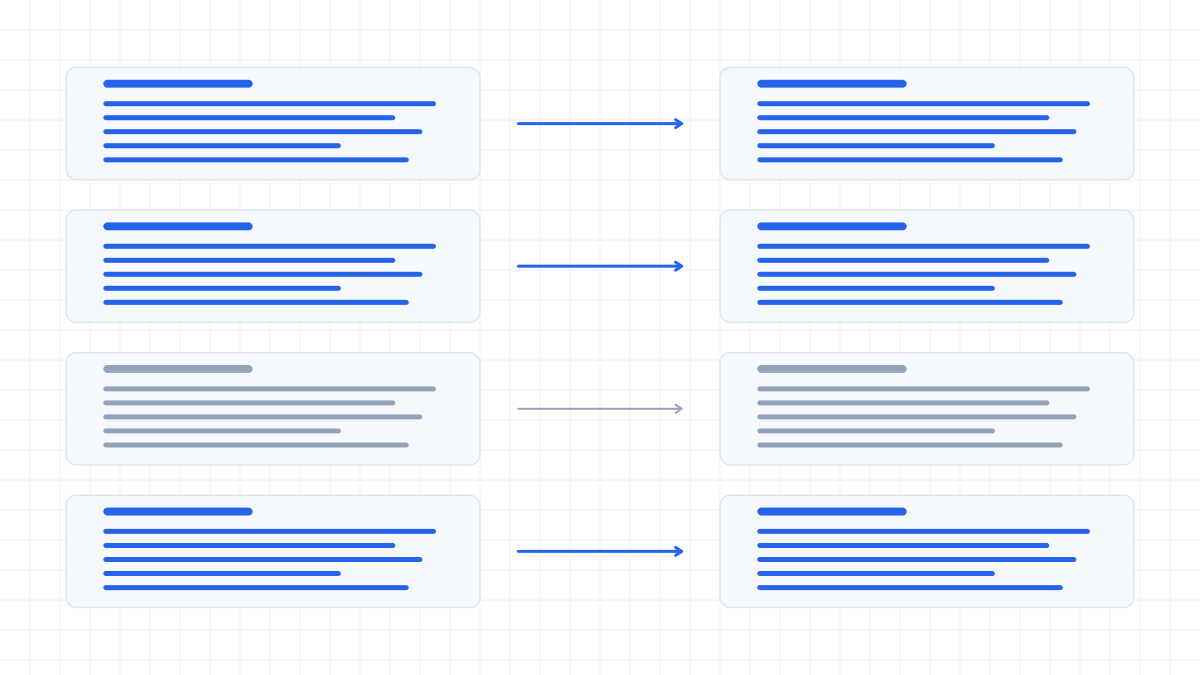
Region-level repair instead of rerunning the document.
- 01
Mark the region
Draw a box around the area that is wrong — a paragraph, a cell, a label. Not the whole page.
- 02
Choose what to do
Restore the source text for that region, retranslate it, or keep it as it is. Three options, no ambiguity.
- 03
Only that region is reprocessed
The rest of the document is untouched. No full rerun, no risk of the parts that were already correct changing underneath you.
What we do not claim about quality
This is the area where vendors are most tempted to invent numbers. We do not.
We do not publish accuracy percentages. Accuracy depends on the language pair, the domain, the document and the definition being used, and a single number across all of those would tell you nothing.
We do not publish benchmark scores. Benchmarks measure performance on benchmark data, which is not your documents.
We do not claim the output needs no review. It is checked by our pipeline before it reaches you, and whether your process requires a human review on top of that is your call, not ours to make for you.
Quality questions
What is your accuracy rate?
We do not publish one. Accuracy depends on the language pair, the domain and the document, and a single figure across all of them would be meaningless. Send a document and judge the output.
Do you use MQM or a similar framework?
The pipeline runs four checks — terminology, completeness, independent model review and visual verification. If your process requires a specific scoring framework on top of that, tell us and we will say whether it is workable.
Who reviews the translation?
The pipeline reviews it before delivery, using a separate model from the one that produced it. Whether a human reviews it after that is your process decision.
What if only one paragraph is wrong?
Mark that region and choose restore, retranslate or keep. Only the marked area is reprocessed, so the rest of the document cannot change underneath you.
Can you run LQA on translations we produced elsewhere?
That is a different service from our pipeline and would be scoped separately. Talk to us about what you need checked.
Does the visual check catch layout problems?
Yes — that is its purpose. The rendered result is compared against the source so overflow, overlap and broken tables are caught before delivery rather than by your client.
Send a document with your glossary attached.
Then check every term yourself. That is a real quality measurement, and it takes minutes.
- Your document
- Your terminology
- Your judgement