Solutions
Six kinds of document. Six different ways they break.
The translation problem is rarely the language. It is clause numbering, or a table that no longer fits, or a term that changes meaning between two departments. Each of these pages starts from what actually goes wrong.
Pick the one that looks like your work
Each page covers what makes those documents hard, the files we receive, how terminology is enforced and how a sample is run.
Legal
Clause numbering, defined terms and cross-references that have to survive translation intact.
Legal translationMedical
Regulated wording where a term has one accepted rendering and an approximation is not acceptable.
Medical translationSoftware localisation
Interface strings, help content and release notes, where length and consistency both matter.
Software localisationFinance & EDI
Statements, filings and structured messages where a misplaced figure is the whole problem.
Finance & EDITechnical documentation
Manuals and procedures where a step has to stay a step, in the same order, with the same warnings.
Technical documentationE-learning
Slides, workbooks and handouts where layout is part of the content, not decoration around it.
E-learning
What is the same on all six
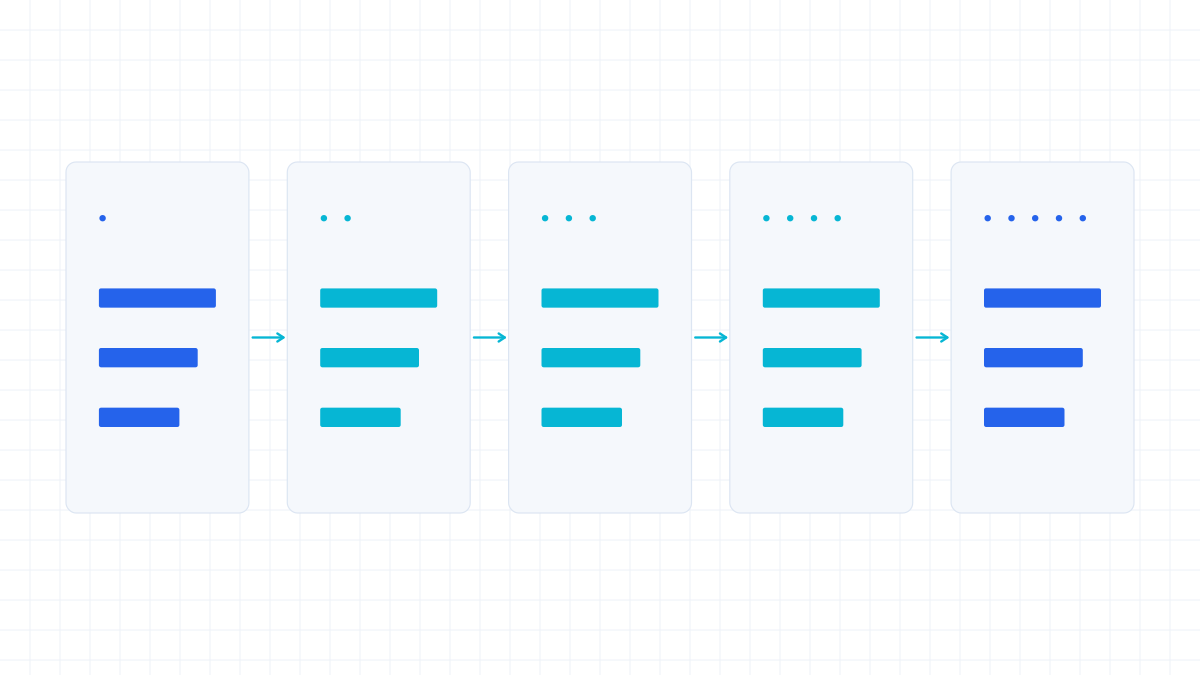
Every one of these pages runs on the same pipeline: the file is inspected before translation, each page is routed on its own, your term list is enforced during translation, the result is reviewed independently, and the rendered output is checked against the source before it comes back to you.
What differs is the terminology and the parts of the document that matter most. That is why there are six pages rather than one.
Questions
Our documents do not fit any of these six.
Then the capability pages are the better starting point — the pipeline itself is not industry-specific. The six solution pages describe where the sharp edges usually are, not a list of what we will accept.
Do you work in our language pairs?
Coverage is scoped per engagement. Tell us the pairs you need and we will answer for your case rather than publish a list that may not apply to you.
Can we start with one document class?
Yes, and that is the usual way. Send one real document from the class you care about and judge the returned file.
Start with the class that costs you the most rework.
Send one real document from it. The evaluation is the same whichever page you came in through.
- No signup, no self-service portal — you send a file, we run it.
- You get the finished document back, not a screenshot of one.
- If it is not good enough, you have lost nothing.